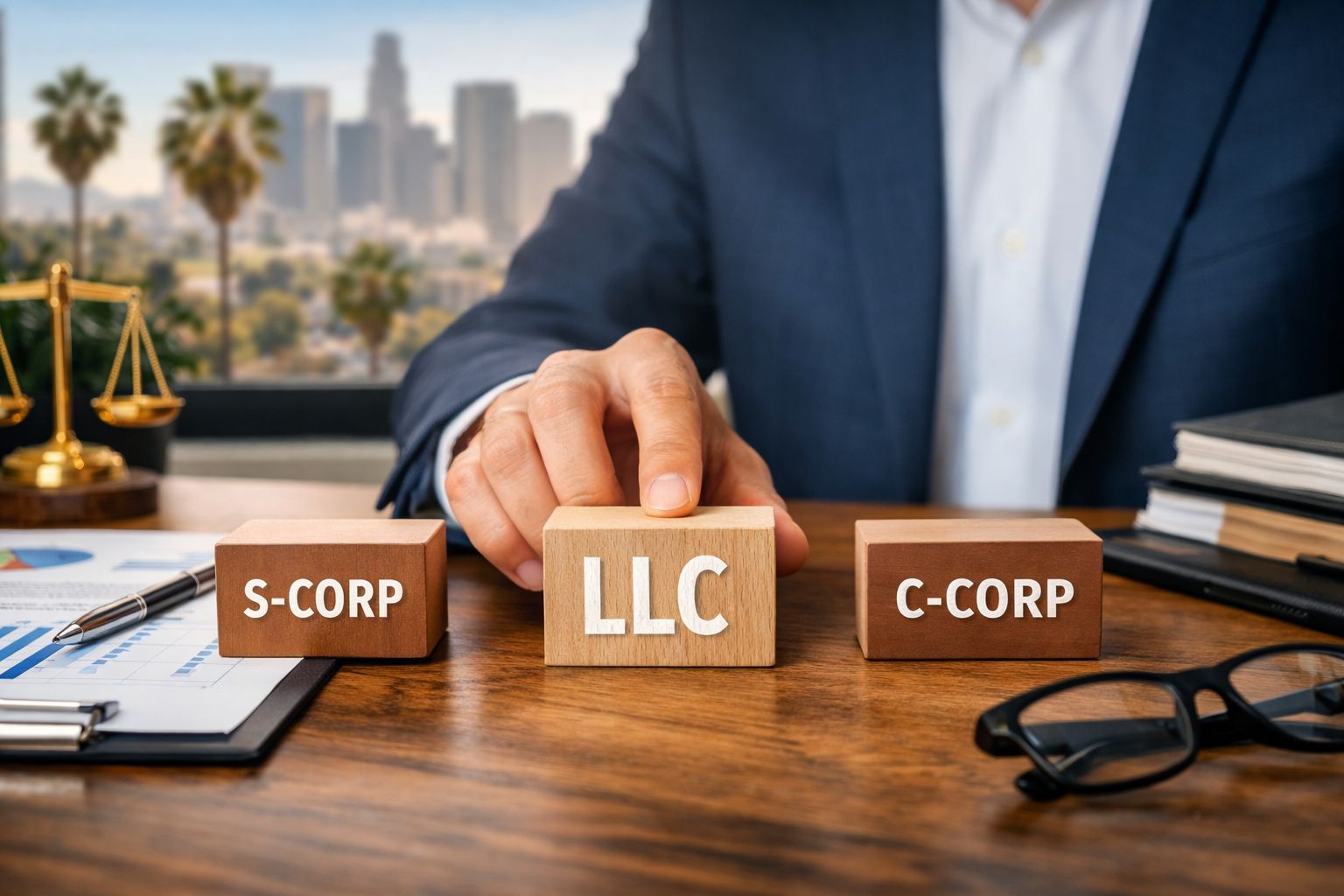
Forming a business entity in California is often treated as an administrative step that can be completed quickly and inexpensively online. In reality, the choice of entity is one of the most consequential decisions a business owner will make. It affects personal liability, tax exposure, governance requirements, investor readiness, and the ability to restructure or exit in the future.
California presents unique challenges that make entity selection particularly important. LLCs, corporations, and partnerships are all subject to different statutory frameworks, tax regimes, and compliance obligations. For example, California imposes franchise taxes regardless of profitability, and certain entity types may trigger unexpected state or federal tax consequences if not structured properly at inception. What appears efficient in the short term can become expensive or restrictive as the business grows.
Another common issue arises when founders form entities without aligning ownership structure, voting rights, or transfer restrictions with their long-term goals. Disputes between owners frequently trace back to formation documents that were incomplete, inconsistent, or copied from generic templates. Once a business has assets, revenue, or investors, correcting these deficiencies often requires complex restructuring, additional tax analysis, or negotiated buyouts.
At Harborview Law, entity formation is approached as a strategic planning exercise rather than a filing service. The goal is to align the legal structure with how the business will actually operate, raise capital, assume risk, and ultimately transition. Getting the structure right at the beginning can prevent costly problems later and provide a stable foundation for growth.
Subscribe to receive updates
Subscribe to receive the latest blog posts to your inbox every week.